

Table of Contents
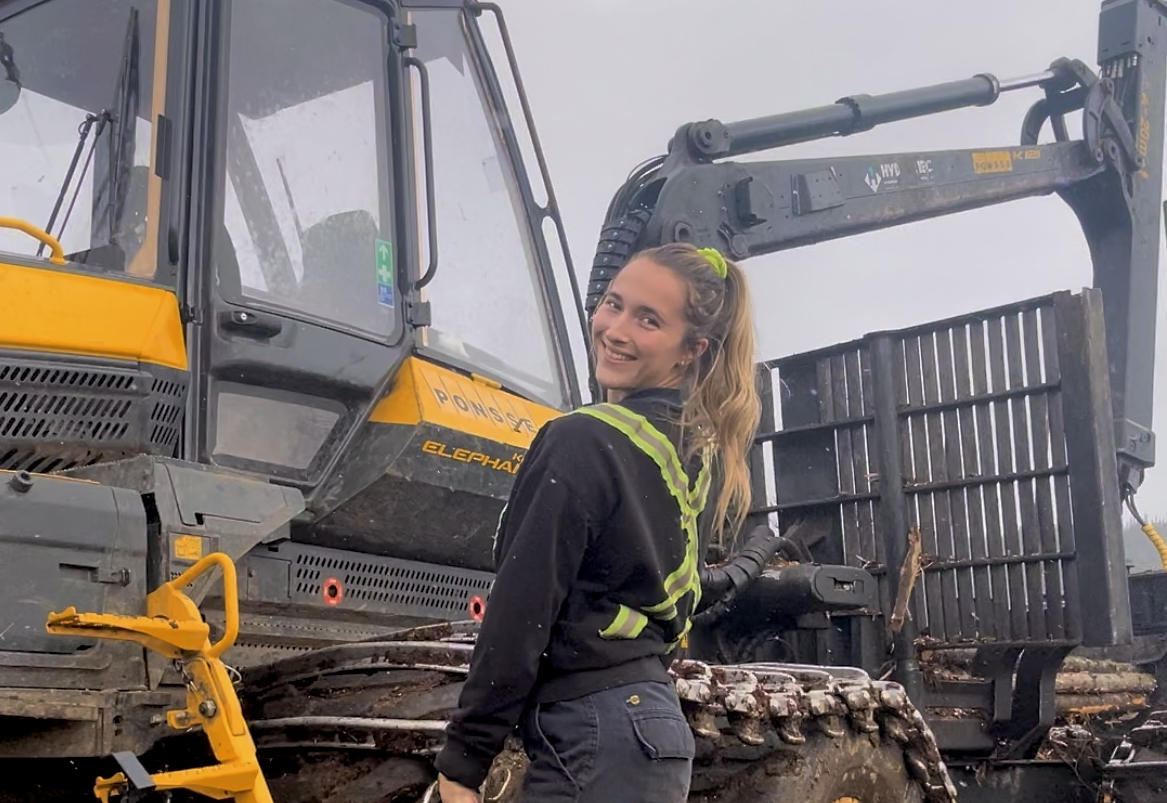
A Girl. A Machine. A Career.
It’s been a while since Cyndi asked me to write an article about my job. Since then, the idea has been sitting in the back of my mind, and I’ve collected bits and pieces of sentences in the notes on my phone without ever really knowing where to start.
Today, after almost six years in the industry, I think the time is right.
Not just to explain what I do, but to tell you how a shy girl who was afraid of bothering people and didn’t always dare take her place ended up operating forestry equipment, working long days in the woods, and learning how to find her place in a mostly male-dominated world.
And most of all, to tell you about the highs, the lows, and everything you don’t necessarily see behind a girl sitting inside a massive machine.
Welcome to My Life in the Woods
To understand what my day-to-day life looks like, you first need to understand a little about how the forestry industry works in Quebec, more specifically in the Lac-Saint-Jean region.
Forest harvesting is a big chain where several trades and several machines work together. I’m part of the harvesting crew.
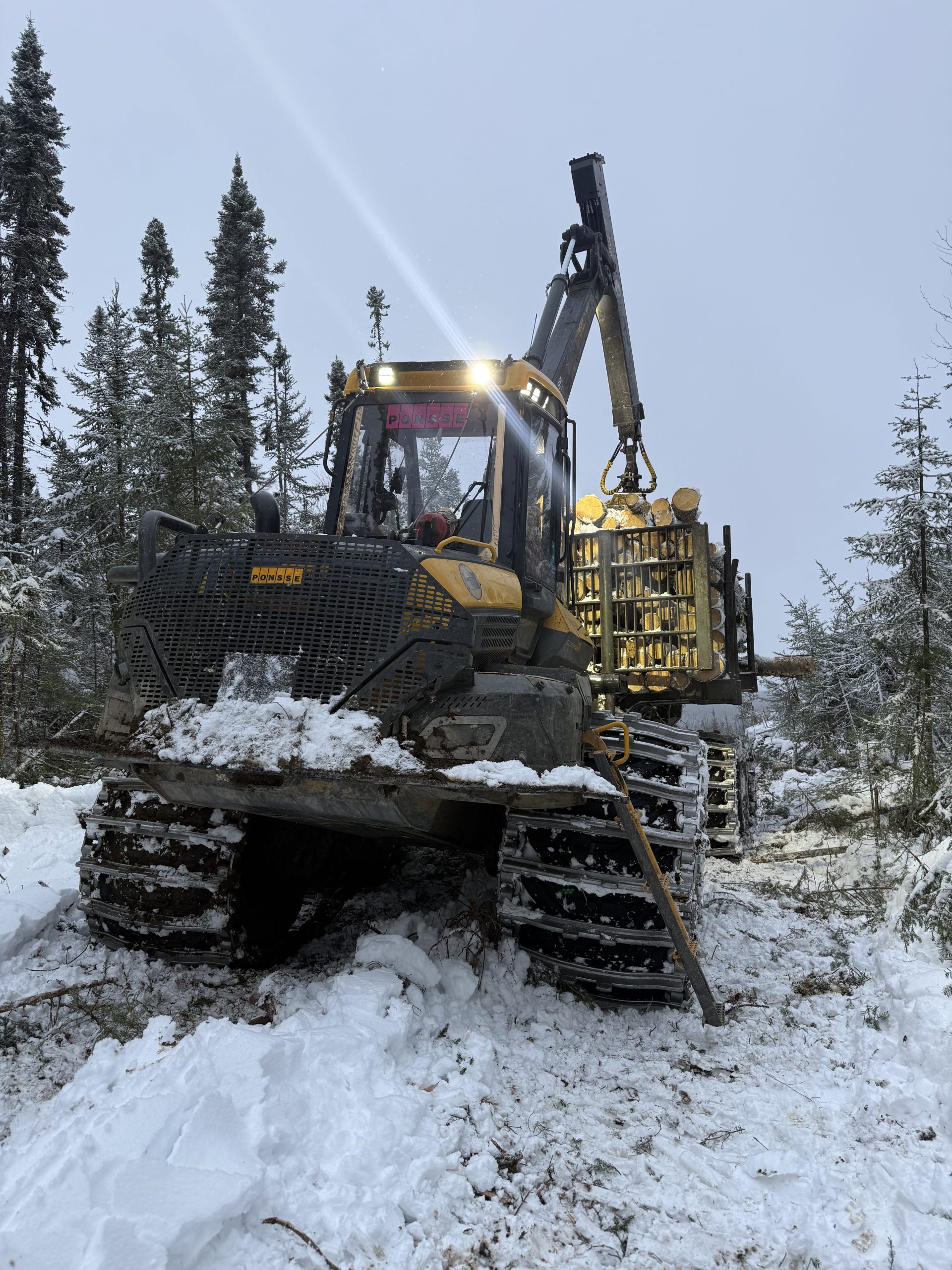
I mainly operate two types of machines. The first is a cut-to-length harvester equipped with a multifunctional harvesting head. Just like its name suggests, it cuts the trees, removes the branches, and places them into small piles called bunches. These piles are made according to the required length and the species of tree.
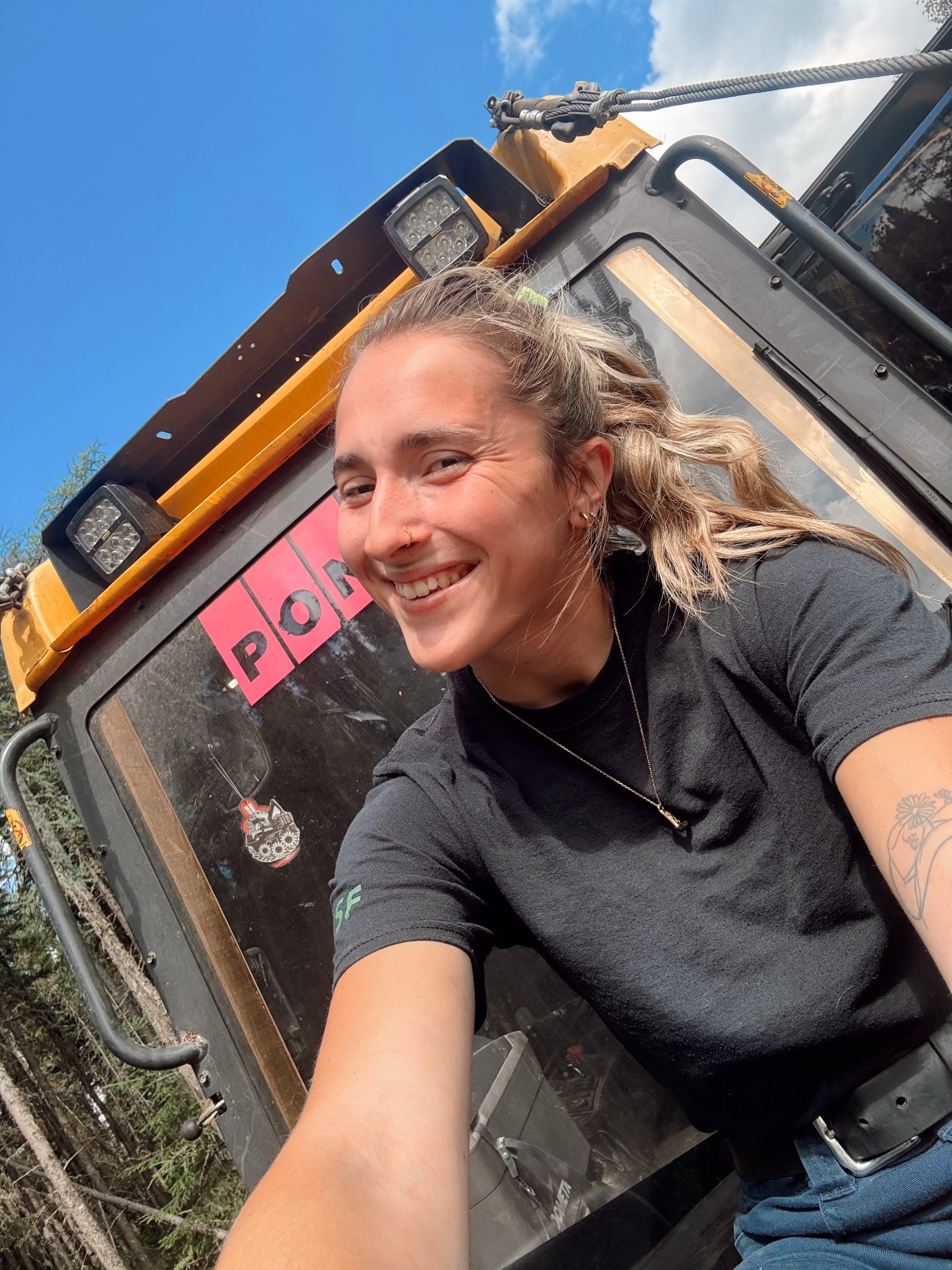
Then my forwarder comes into play. It’s that big machine with a cab and a bunk at the back that travels along the trails created by the harvester. I pick up the bunches, load them into the bunk, and transport them to the side of the road, where I build large piles.
After that, the trucks come to pick up the wood and take it to the mill.
It might sound pretty simple when you explain it like that. In reality, every step requires precision, experience, knowledge, and, above all, good coordination between the workers.
Every machine depends on the one before it, and every person plays an important role in that chain.
A Week in the Woods
In my sector, the schedule is generally four days on, three days off, Monday through Thursday.
But working in the forest means leaving home to live at a forestry camp during the week.
Trailers, a kitchen, bedrooms, bathrooms, and a bunch of workers who slowly become like a second family during your workdays.
The machines can run 24 hours a day. So we generally alternate between day shifts and night shifts, with workdays lasting around 12 hours.
And then there’s the driving: about an hour on the road in the morning and another hour in the evening to get to and from camp.
You miss dinners, evenings, activities, birthdays, and sometimes important moments.
It’s a very particular way of life. And to live it, you have to be passionate.
Because it’s not just a job. It’s a lifestyle.
And Me, in All of This?
Okay. Now let’s go back to my journey and where it all started.
When I tell you that I’m a forester, a woman working in a field traditionally considered a “man’s job,” you might picture a confident woman who knows how to take her place, isn’t afraid to speak up, has a quick comeback, and has no problem saying exactly what she thinks.
But the truth is, I was—and sometimes still am—the complete opposite.
I was a shy young girl who was afraid of bothering people, who didn’t always dare speak up for herself, and who had a really hard time saying what she truly wanted to do with her life.
And that’s probably what makes my journey even more unique.
Because in the beginning, I wasn’t the girl who dreamed of breaking barriers or proving something to anyone. I was simply a girl who loved machines and wasn’t sure yet if she was confident enough in herself to go after what she wanted.
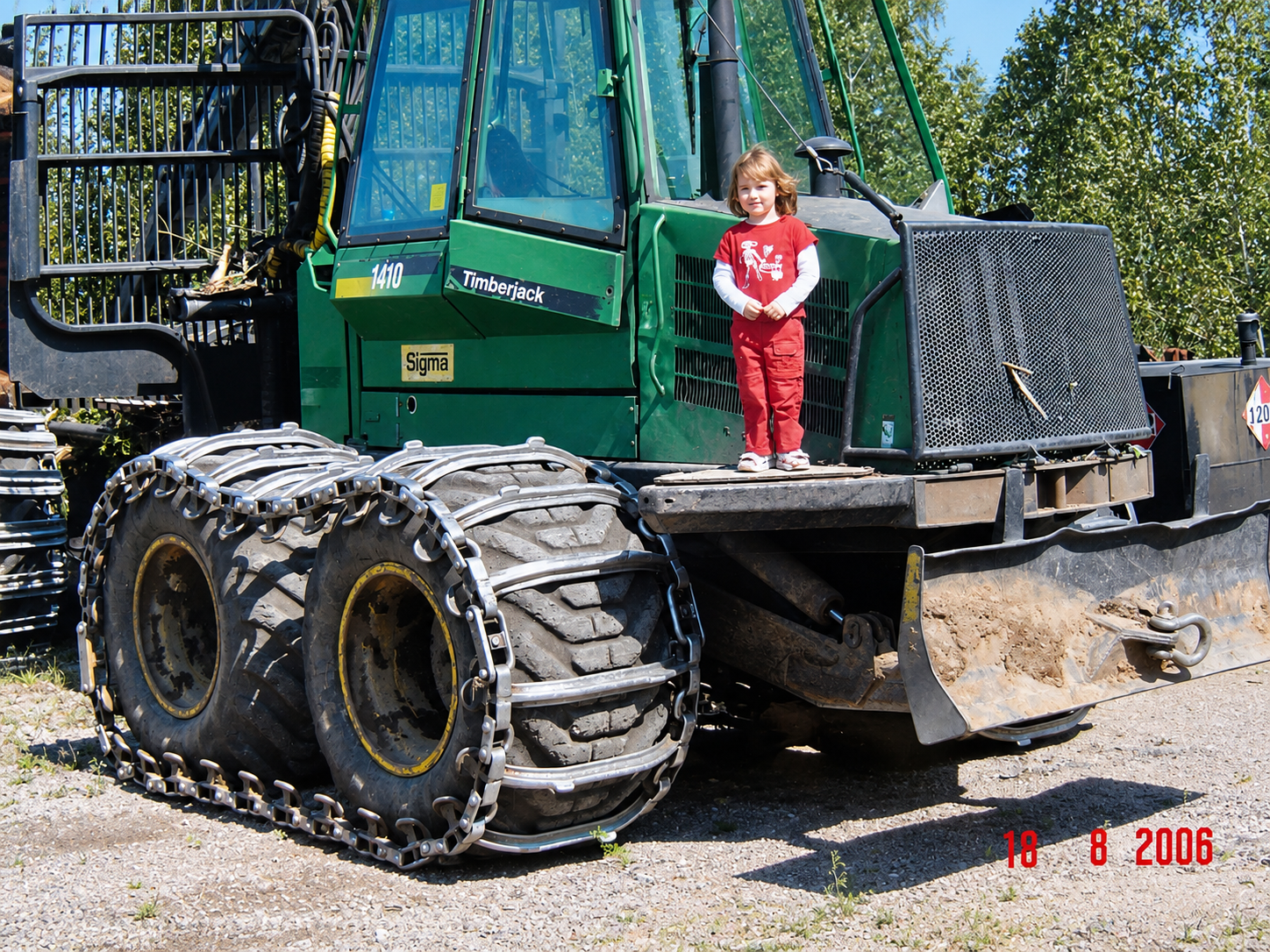
I grew up around machines. I never really had some sudden love-at-first-sight moment with the forest. It had always been part of my life.
My father was a passionate forester himself, so I grew up around forestry equipment. My parents quickly noticed my interest in that world and encouraged me to explore it.
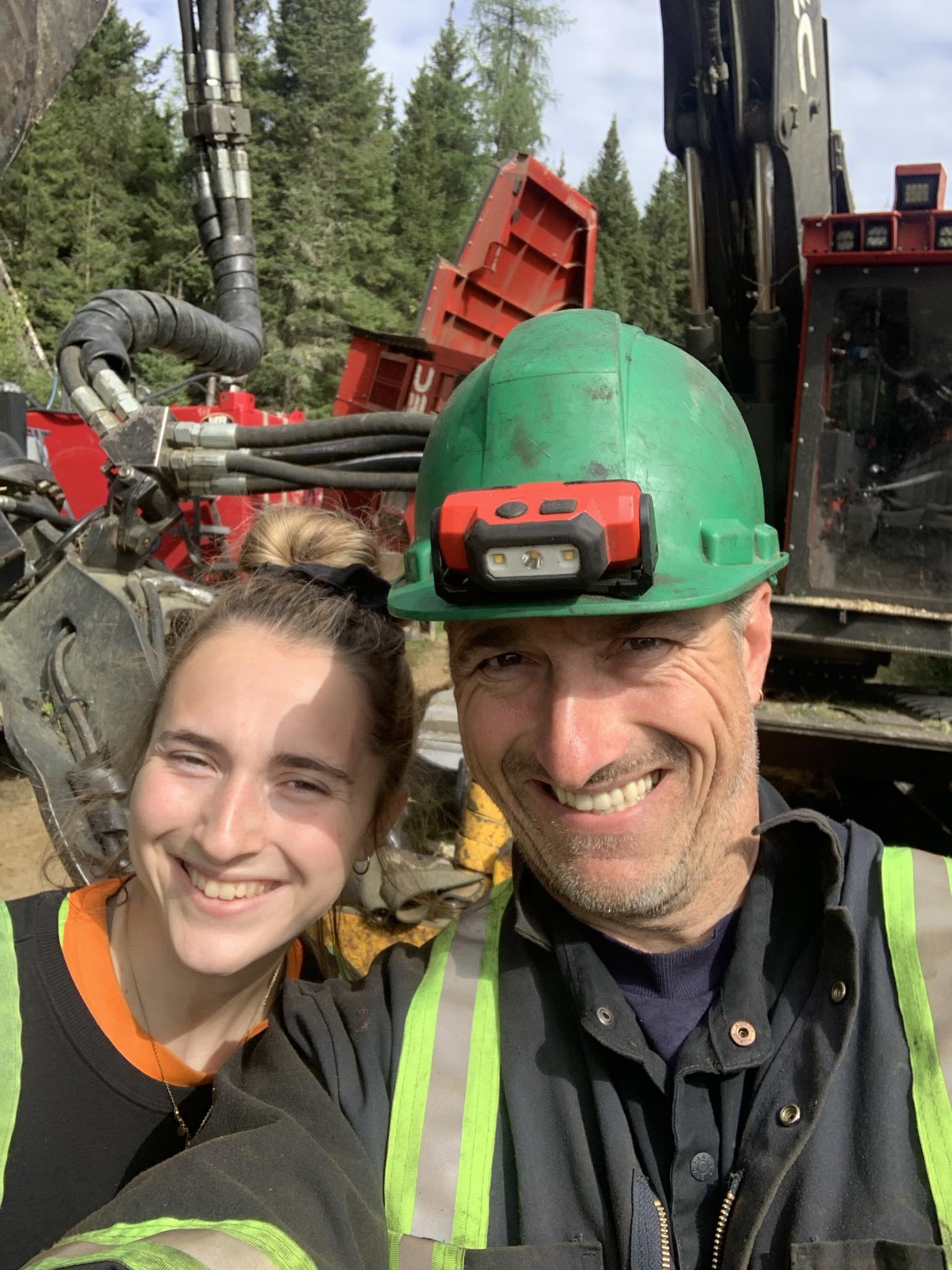
At 16, during Secondary 4 and 5, they encouraged me to try working as a forestry technician during my summer vacations.I spent long days walking through the forest, doing plots for quality control and, most importantly, discovering what life on a work site was really like.
I loved it. I loved the forest, the work-site atmosphere, and everything that came with it.
But I was also realizing that this wasn’t exactly what I wanted to do as a career.
By the time I reached Secondary 5, I found myself facing a wall: I had to decide what I was going to do after high school. I had enjoyed my experience as a forestry technician, but not enough to go to CEGEP in that field.
That’s when I had to admit something I had probably known for a long time: I was a girl who belonged around machines.
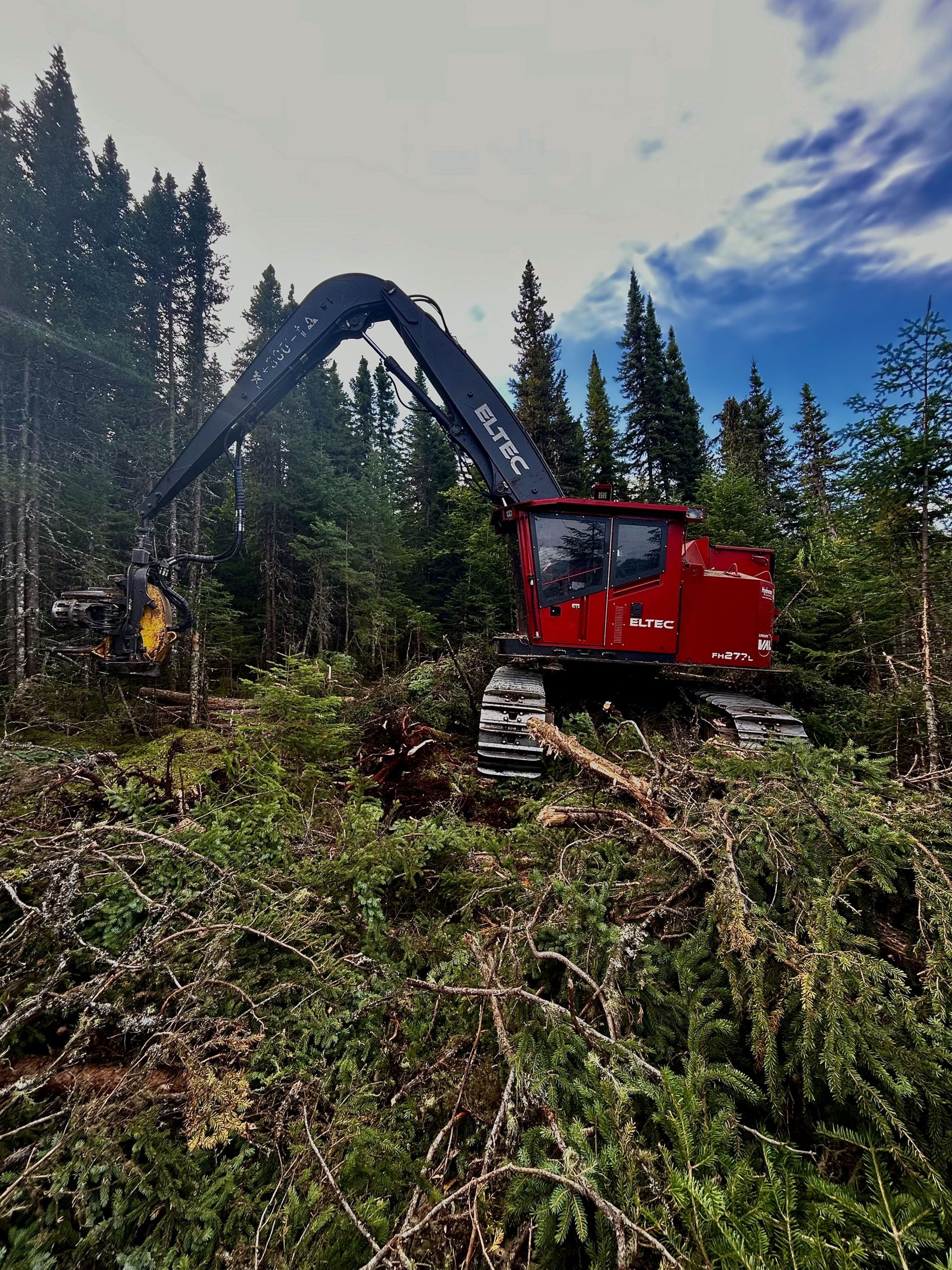
What I really wanted was to be behind the controls of a big machine.
So I gathered up my courage and told my guidance counsellor that I wanted to complete my DEP in forest harvesting and processing.
I think that was probably one of the first times I had truly dared to clearly say what I wanted.
And that choice was about to completely change the course of my life.
The Beginning of My Forestry Journey
January 2021. First day of my DEP.
Even today, I’m not exactly sure where I found the courage to walk into that classroom. I was nervous, I doubted myself, and I knew I was entering a field where women were far from being the majority.
Fortunately, some faces were already familiar, which made the beginning a little less intimidating.
Six months later, I entered the real world of forestry. I was 18. And despite all the challenges, I was happy. I felt like I belonged.
During my first year, I was the new girl. The one who was learning. The one people had to explain things to.
Then, little by little, I learned. I got better. And I think that’s when I understood something important for the first time:
Being a woman in a traditionally male-dominated trade isn’t just about learning how to do the job. It’s also about learning how to deal with other people’s perceptions.
Because after a while, I wasn’t “the new girl” anymore. I had become good at what I did. And that didn’t necessarily sit well with everyone.
Some of the guys became tougher on me. The expectations were high. I constantly had to prove that I was there for the right reasons and that I was capable of doing the job.
Then my third year came around.
At first, I had started making TikToks about my work. And, against all expectations, they were actually doing really well. The views were climbing quickly, and I was getting messages from girls asking me how I had done it, which DEP they should take, or simply whether I thought they could do it.
Some told me they wanted to do it too.
I didn’t expect that. I thought I was simply showing people my everyday life. In the end, I was discovering that showing a girl inside a massive machine could give other girls the courage to try.
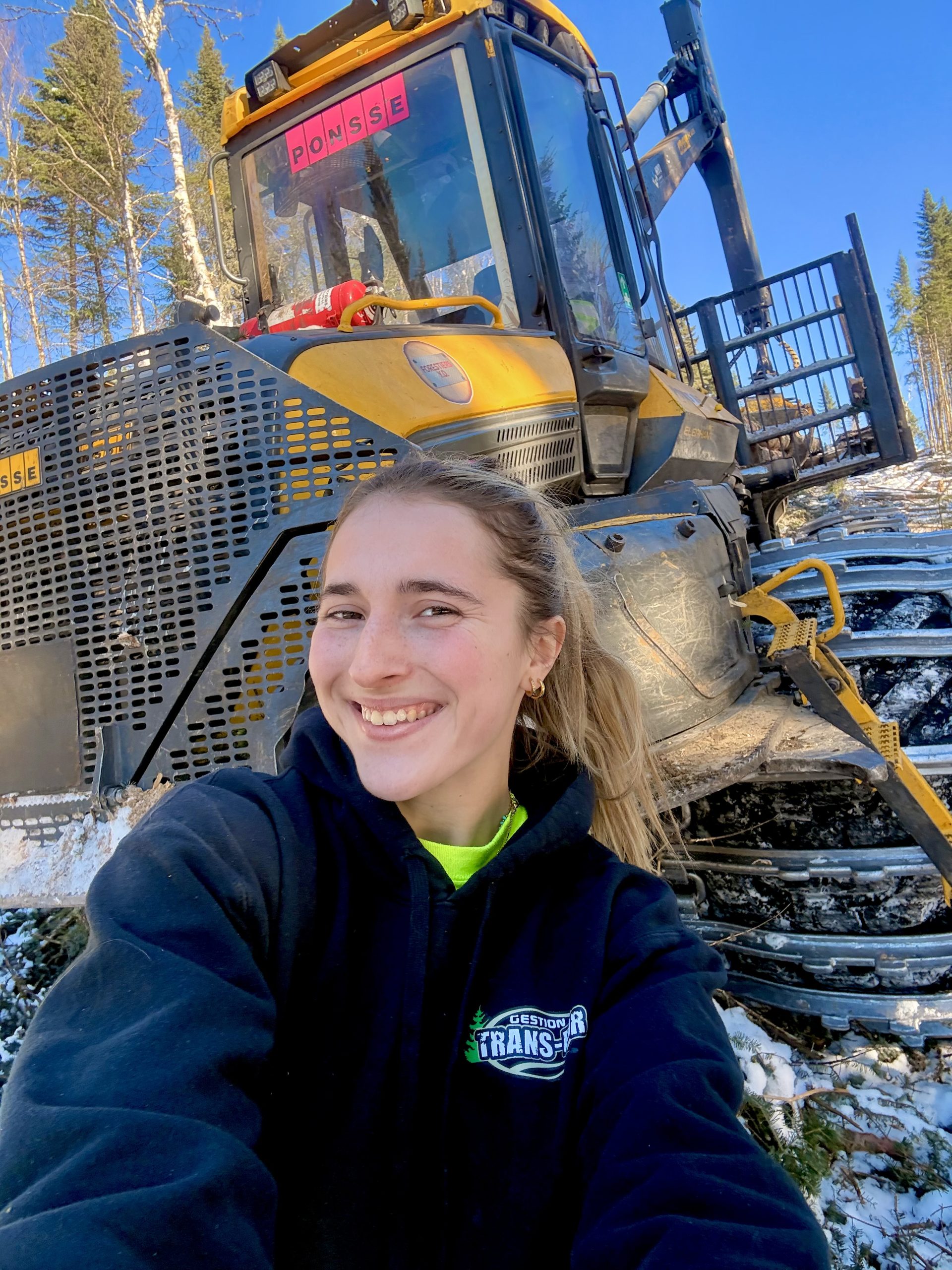
But then my fourth year arrived with new coworkers, new challenges, tougher conditions, and a level of exhaustion that was starting to build up.
An already demanding work life, combined with everything else. And slowly, something changed.
For the first time in my life, I didn’t want to get out of bed in the morning. I was starting to hate my job. And that’s much harder to deal with when your job isn’t just a job. When it’s your lifestyle. When it’s your passion. When it’s one of the most important things in your life.
I almost gave up on everything.
For nearly two years, I went through a real roller coaster. I stopped making TikToks. I stopped putting myself out there with my machine.
I was exhausted from dealing with the comments, the looks, and the remarks, both on the work site and online.
And above all, I was afraid of disappointing people. Disappointing my parents, who had believed in me. Disappointing the people around me. But also disappointing all those little girls who were writing to me because they wanted to do what I did.
At one point, I seriously considered changing careers.
But every time I asked myself:
“What would you rather do?”
Nothing came to mind.
All I wanted was to keep operating machines.
That was probably the hardest part. Because when the career you dreamed of starts making you unhappy, you’ve got one hell of a problem.
I didn’t want to give up.
Not after everything I had been through.
Not after all the effort I had put in.
So I kept going.
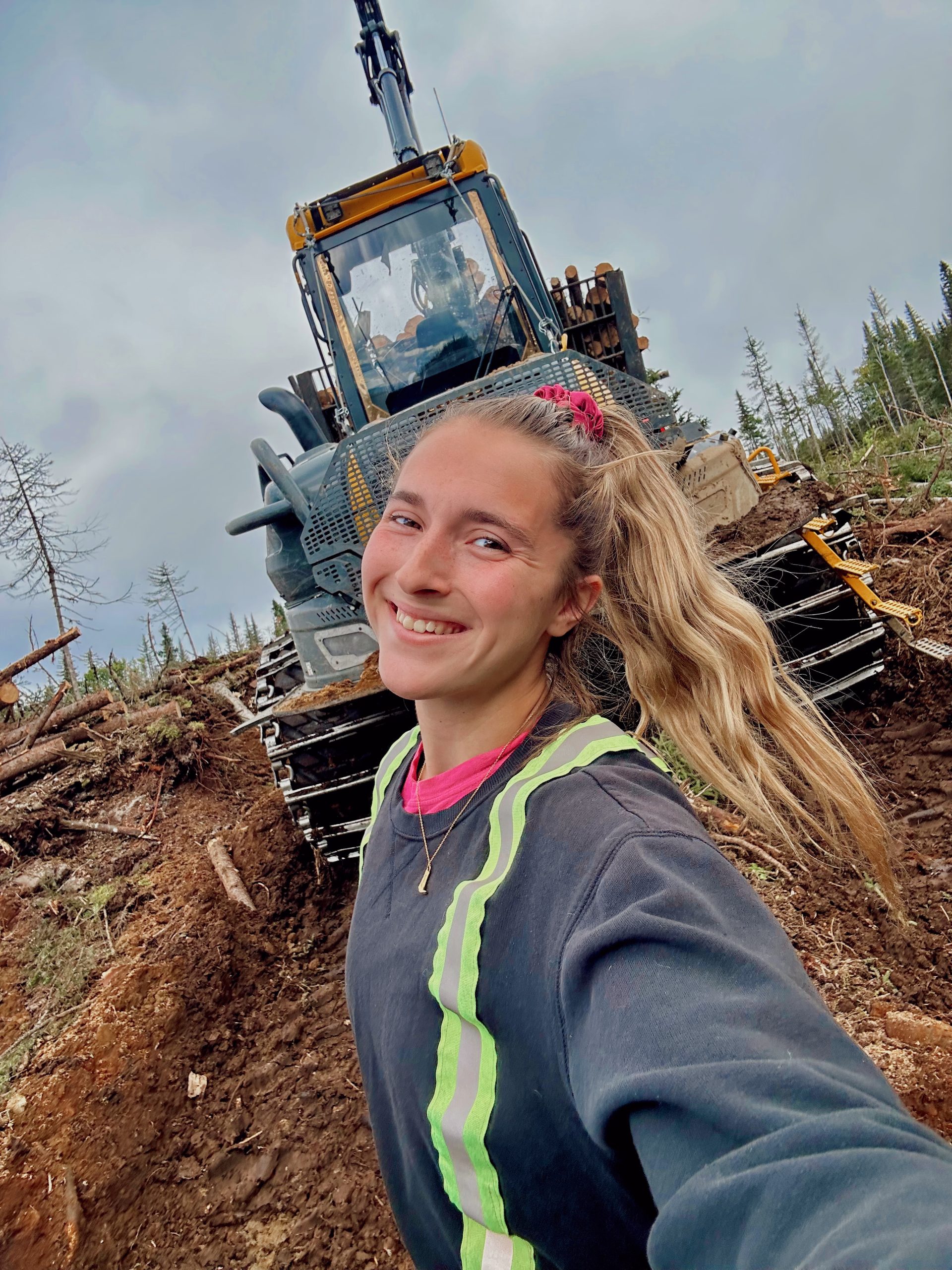
Being a Woman in a Man’s World
There have been challenges. And there still are.
There are the looks you get when you step out of your machine and someone realizes that the person behind the wheel was a woman.
There are the meals in a dining hall where you’re surrounded almost exclusively by men.
There’s camp life, shared bathrooms, and sometimes facilities that clearly weren’t designed with everyone in mind.
There are the comments.
Some are downright inappropriate. Others are simply awkward or probably made without bad intentions.
There are also the people who tell you it’s just a phase and that you’ll eventually quit.
So you set the bar high for yourself.
You want to be good.
Not “good for a girl.”
Just good.
Like any other employee.
There’s also the physical strength factor.
Yes, sometimes, when it comes to mechanics or certain tasks, you may not have the strength.
But once again, you learn to work smarter, find different ways of doing things, and become independent.
Just like any other worker.
And then there are the much more mundane things we don’t necessarily think about: finding work gear that actually fits when you wear an X-Small and a size 6 shoe, for example.
It sounds like a small thing.
But when you constantly have to adapt your equipment to your reality, it becomes another little battle.
Added together, all these little things eventually start to weigh on you.
Today, I get up before the sun.
And yet, here I am.
Almost six years later.
Today, I can finally say that I’m once again passionate about getting up before the sun to go to work.
Are there still challenges? Absolutely.
Will there be more? Without a doubt.
But today, I’m confident enough to say something I might never have dared say at 16:
I belong here.
I’m capable of doing this job just like anyone else.
And most importantly, I love it.
I’ve learned that finding your place in a non-traditional career doesn’t necessarily mean arriving somewhere and suddenly having everything become easy.
Sometimes, you have to fight against other people.
But often, you mostly have to fight against yourself.
Learn to trust your abilities.
Stop constantly looking for approval.
Understand that you don’t have to be perfect to deserve your place.
And keep going even when it’s hard.
To the Girl Who’s Hesitating
If you’re a girl reading this and dreaming about getting into a non-traditional career, I’m going to tell you just one thing:
Go for it.
Yes, you’ll probably face challenges.
Yes, there will be days when you’ll wonder what you’re doing there.
Yes, you’ll have to learn how to take your place.
But today, looking back, I can tell you that everything this journey has given me far outweighs everything it has cost me.
And above all, more girls should dare to try.
Not because we need to prove something to men.
Not because we need to fill a statistic.
Simply because we should be able to choose a career because we love it.
Period.
Even today, when I wake up before the sun to go to work, I sometimes think about little eight-year-old Josi.
And even the 14-year-old version of me who used to look at those huge machines and wonder if she could one day be the one behind the controls.
I think they would be pretty proud to see me today.
So I keep taking my place.
In the woods.
In my machine.
And even on social media, whenever I have the energy for it.
Not to show that women are better.
Not to say that men are wrong.
But to show one very simple thing:
There is no such thing as a job that comes with a gender.
There are jobs we love, challenges we choose to take on, and places we eventually make for ourselves.
And me?
I found my place in the woods, high up in my cab.