


Table of Contents
Nokian Hakkapeliitta 01: the studded tire that really forgives
I’m back from Finland with one conviction: winter isn’t “stable” like it used to be. One day you’re driving on sheer ice, the next it’s almost dry asphalt, then it turns back into a skating rink by evening. And it’s exactly in that kind of chaos that Nokian shows up with something new that genuinely surprised me: a studded winter tire that can automatically adapt to temperature.
On paper, it’s ambitious. On ice… that’s where you understand why everyone’s talking about it.
Sur papier, c’est ambitieux. Sur la glace… c’est là que tu comprends pourquoi ils en parlent autant.
A studded tire… but not like the ones we know
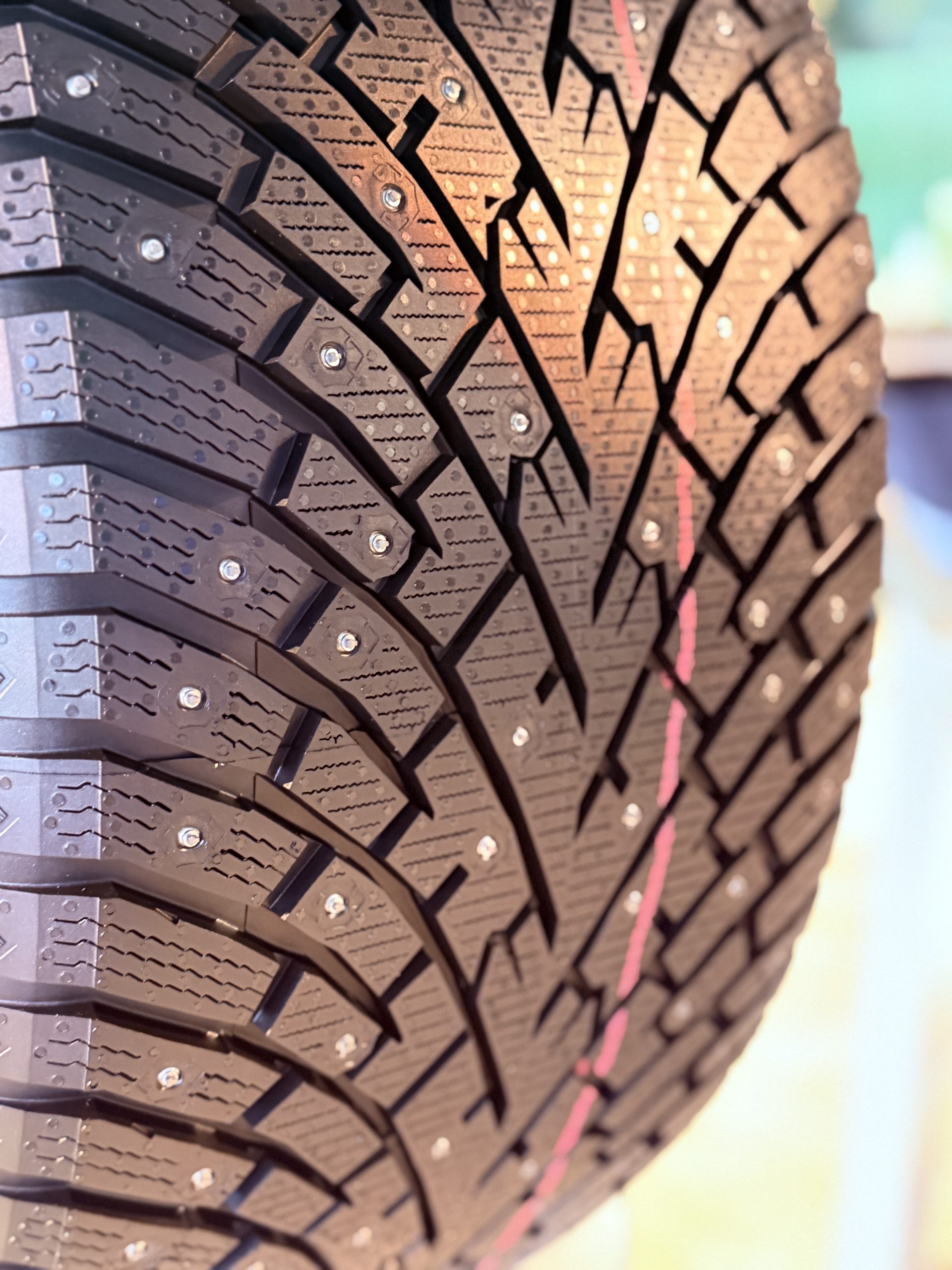
The Nokian Tyres Hakkapeliitta 01 is presented as the world’s first winter tire to offer “on-demand grip.” The idea is easy to explain (and a lot harder to invent): when it’s very cold, the studs go to work at full force; when temperatures rise, they become less aggressive to keep the drive smoother, more precise, and to reduce the impact on the road surface.
This isn’t just about “holding on ice.” It’s an attempt to solve a very real problem: studded tires are incredible in certain conditions, but can be a compromise in others.
How does it work, in practical terms?
Inside the tire, the studs sit on an adaptive base layer. When temperatures are low, that base is stiffer and pushes the studs outward: they stay deployed while driving. When the weather softens, the compound becomes more flexible, applies less force, and the studs retract deeper into the tire. Result: you’re not “stuck” with the same behavior from morning to night.
And in real life, that translates into one key thing: a sense of control that stays consistent, even when the surface changes.
We tested it ourselves—in the extreme
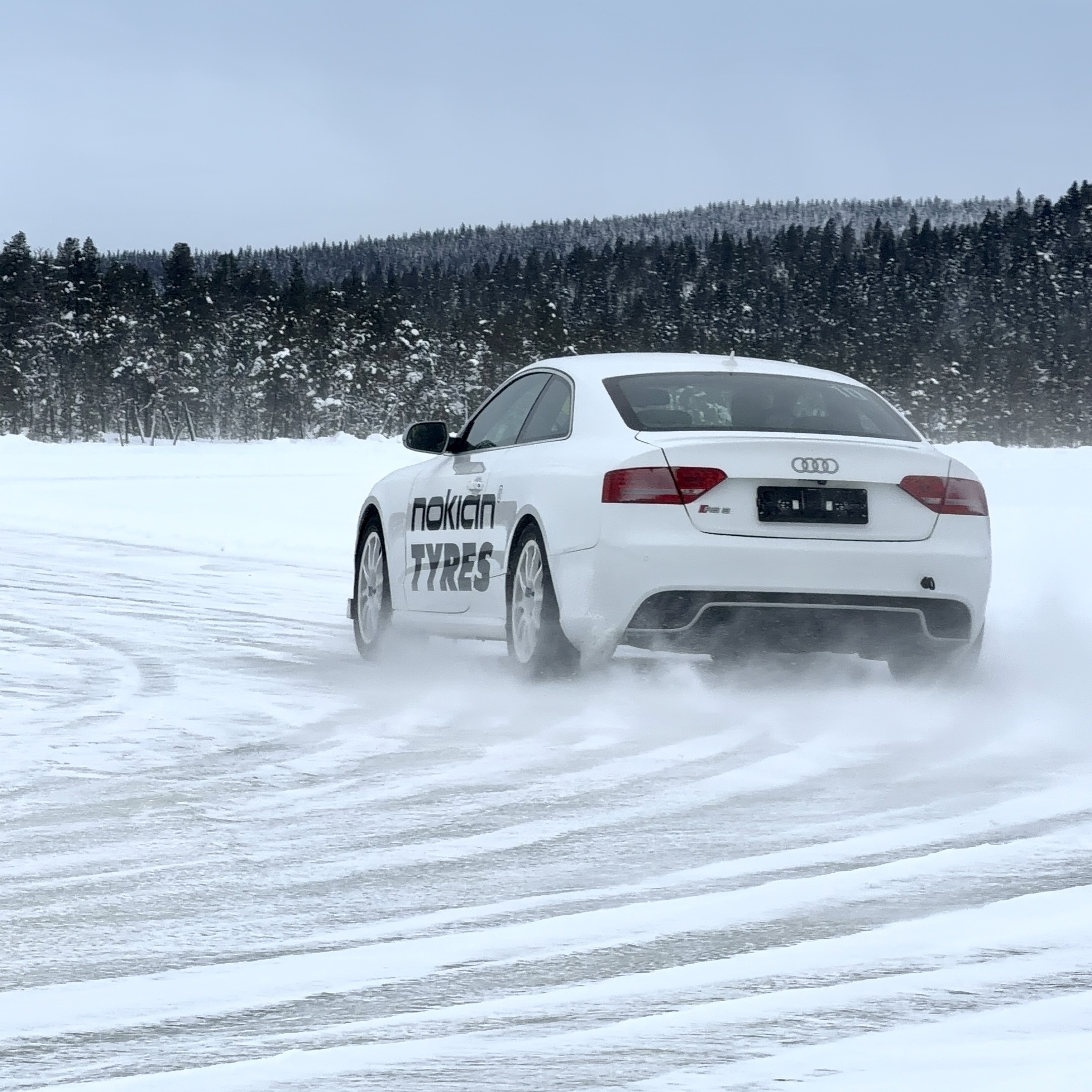
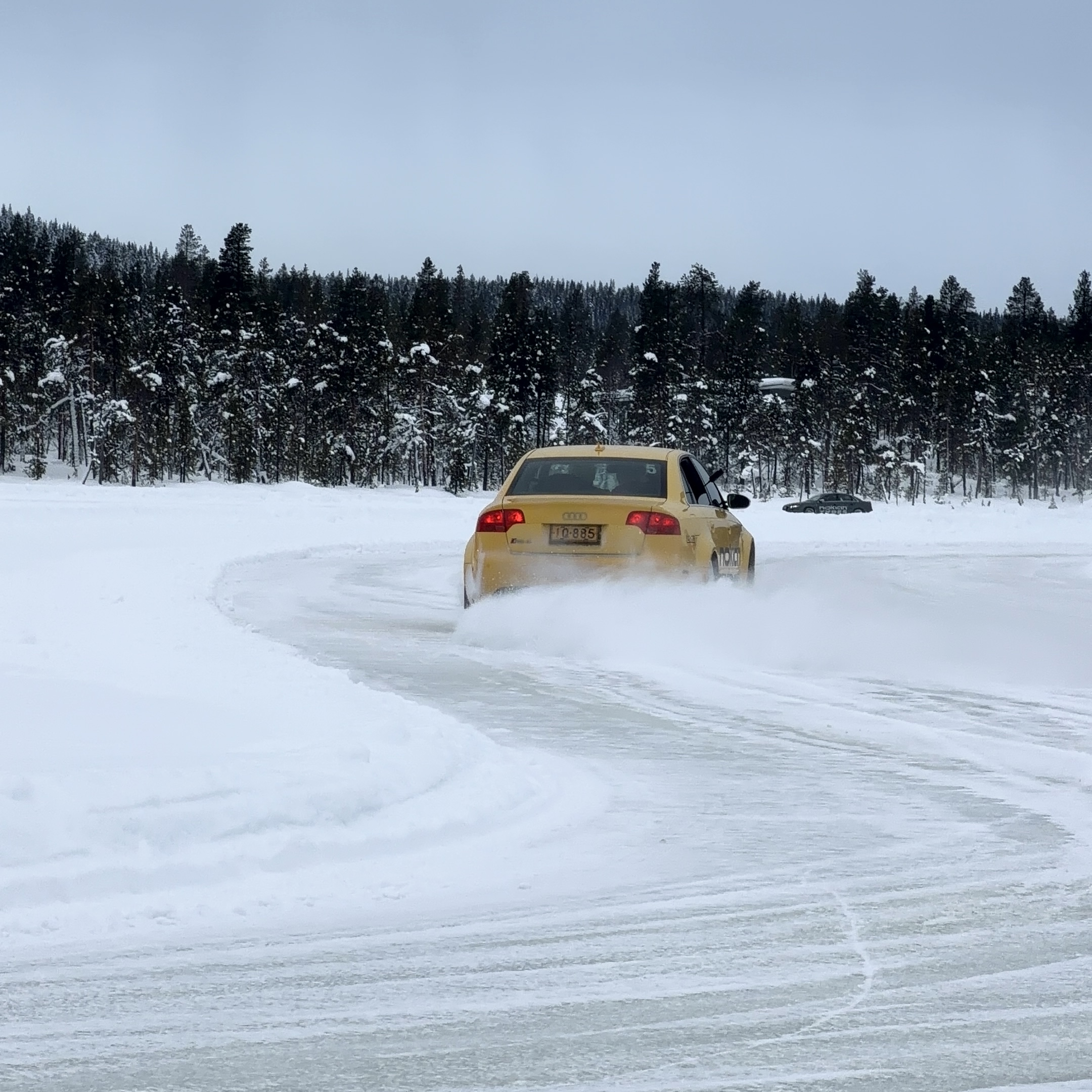
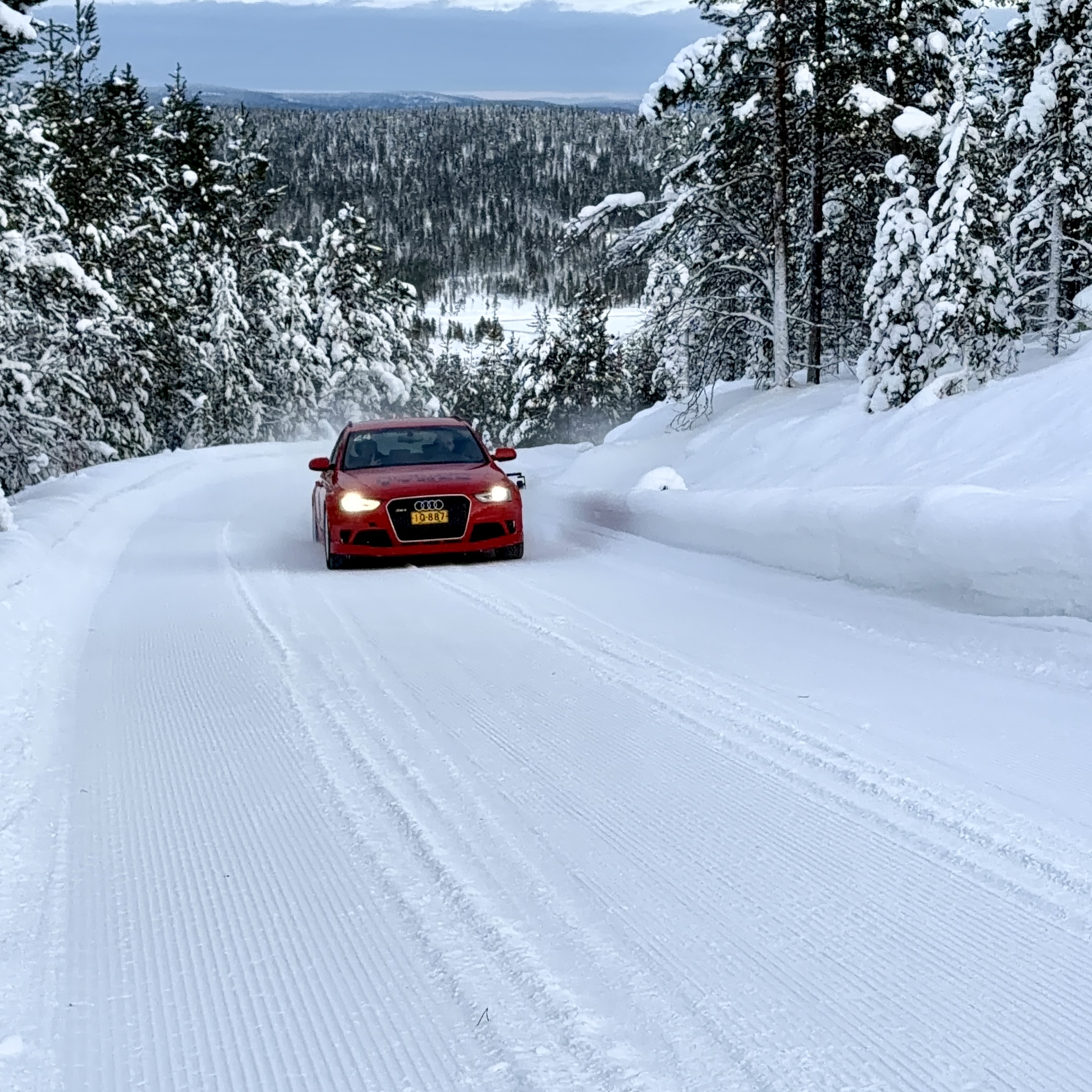
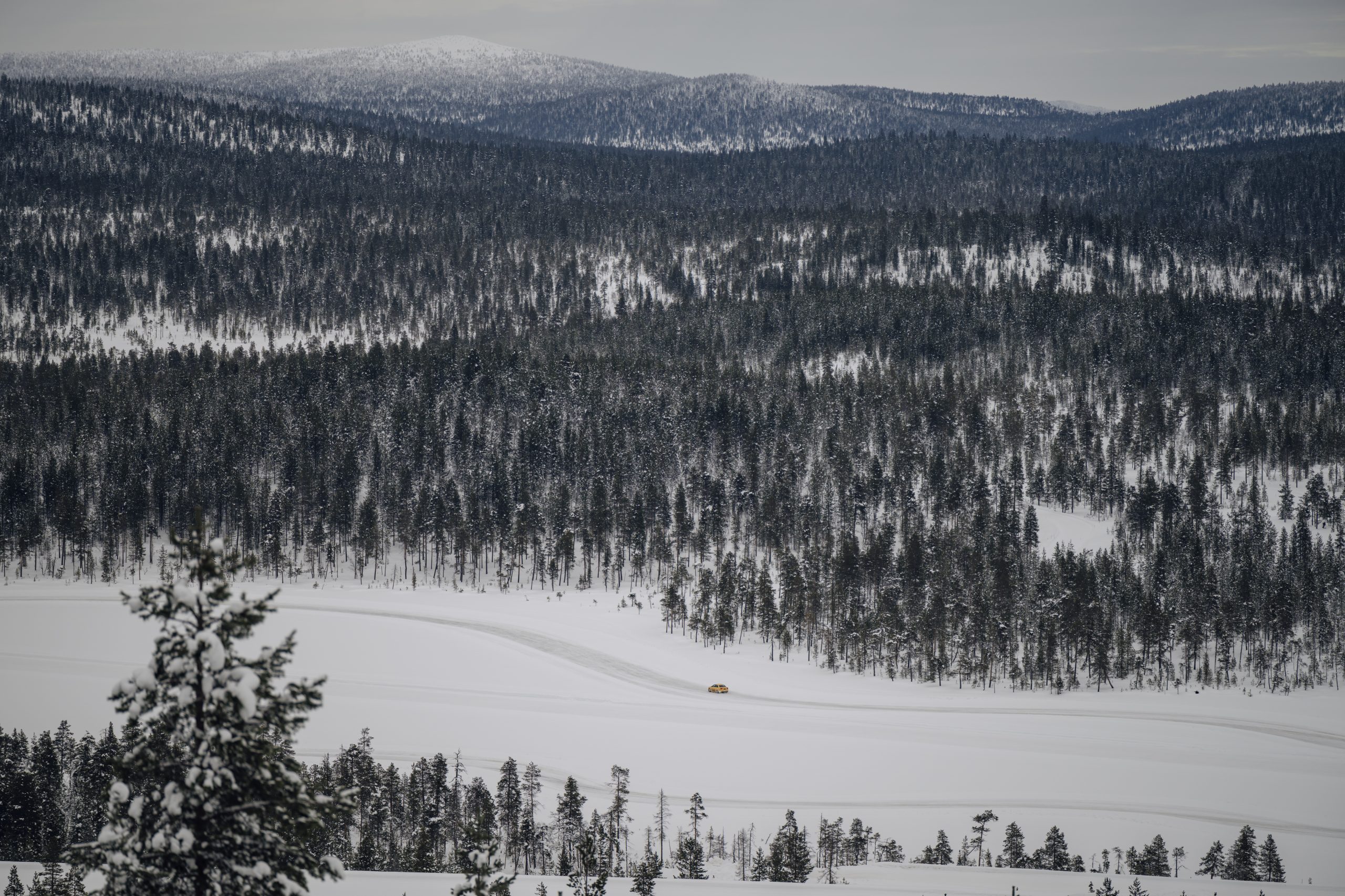
We didn’t test it “nicely.” We tested it in the extreme, at White Hell in Ivalo, in real conditions (and in a place where Nokian has been pushing prototypes for 40 years).
That day it was around -5°C. Not a dry “-30,” but the kind of temperature where winter can be deceptive because you can easily bounce between multiple surfaces.
We drove on:
- sheer ice (the kind that forgives nothing),
- soft snow,
- packed snow.
And within the first minutes, what struck me was how much it grips… but even more, how clearly it communicates that grip. You feel the tire working, you feel the stud system doing its job, and you feel like you’re kept “inside the safe zone.”
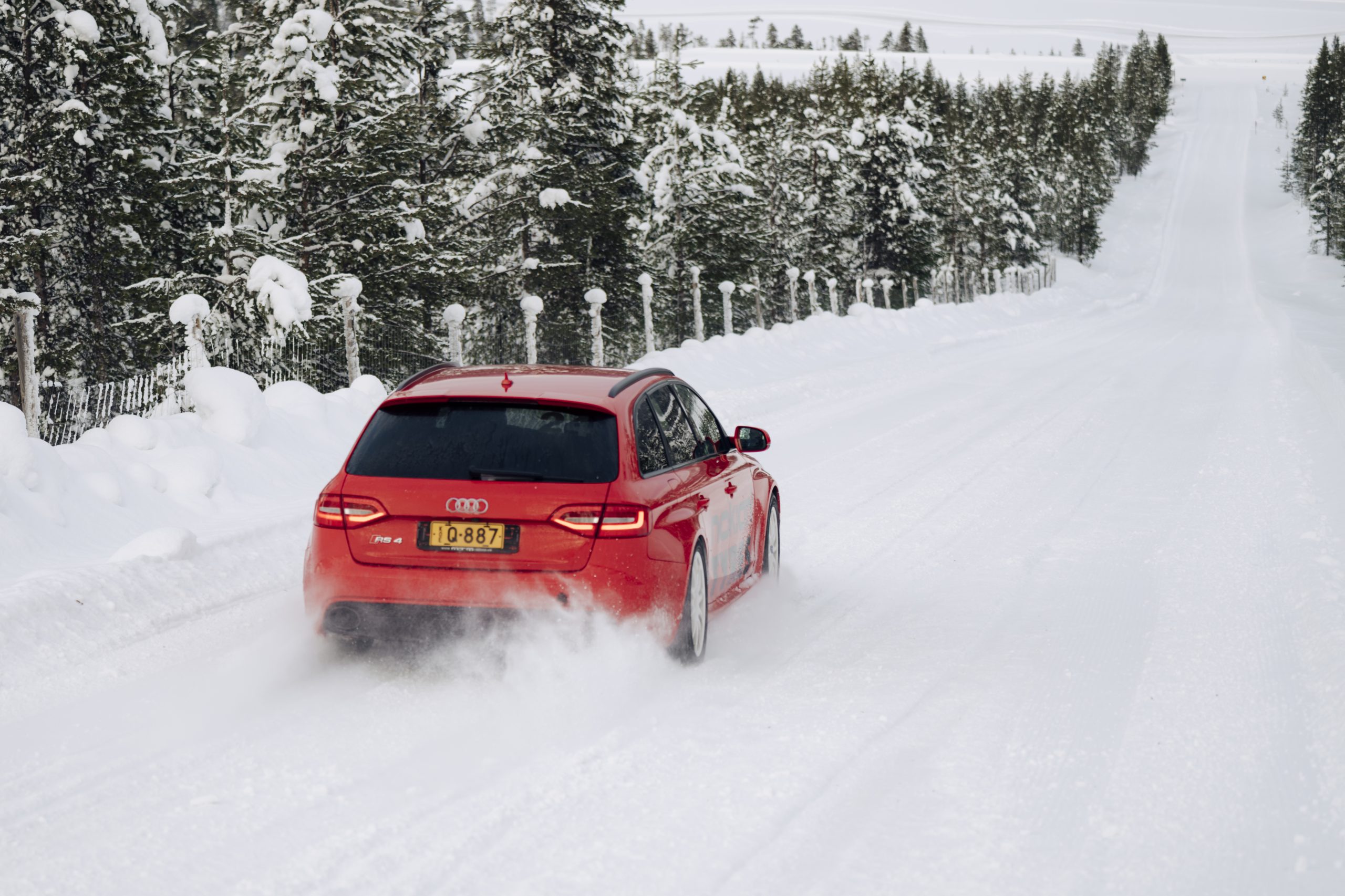
Traction control… and without traction control: even without it, I felt in control
We tried it with traction control—and without traction control.
With it, obviously, it’s reassuring: electronics help cover mistakes. But what really impressed me was without it: even then, I felt in control. The tire is incredibly forgiving. You feel like you can drive, correct, recover… without getting caught by a sudden snap of grip loss.
And to me, that’s the real value: not just being high-performing when everything is perfect, but being reassuring when conditions move, when it slips, when you change load.
Cone cornering tests: where you see if it’s “real” or just good in a straight line
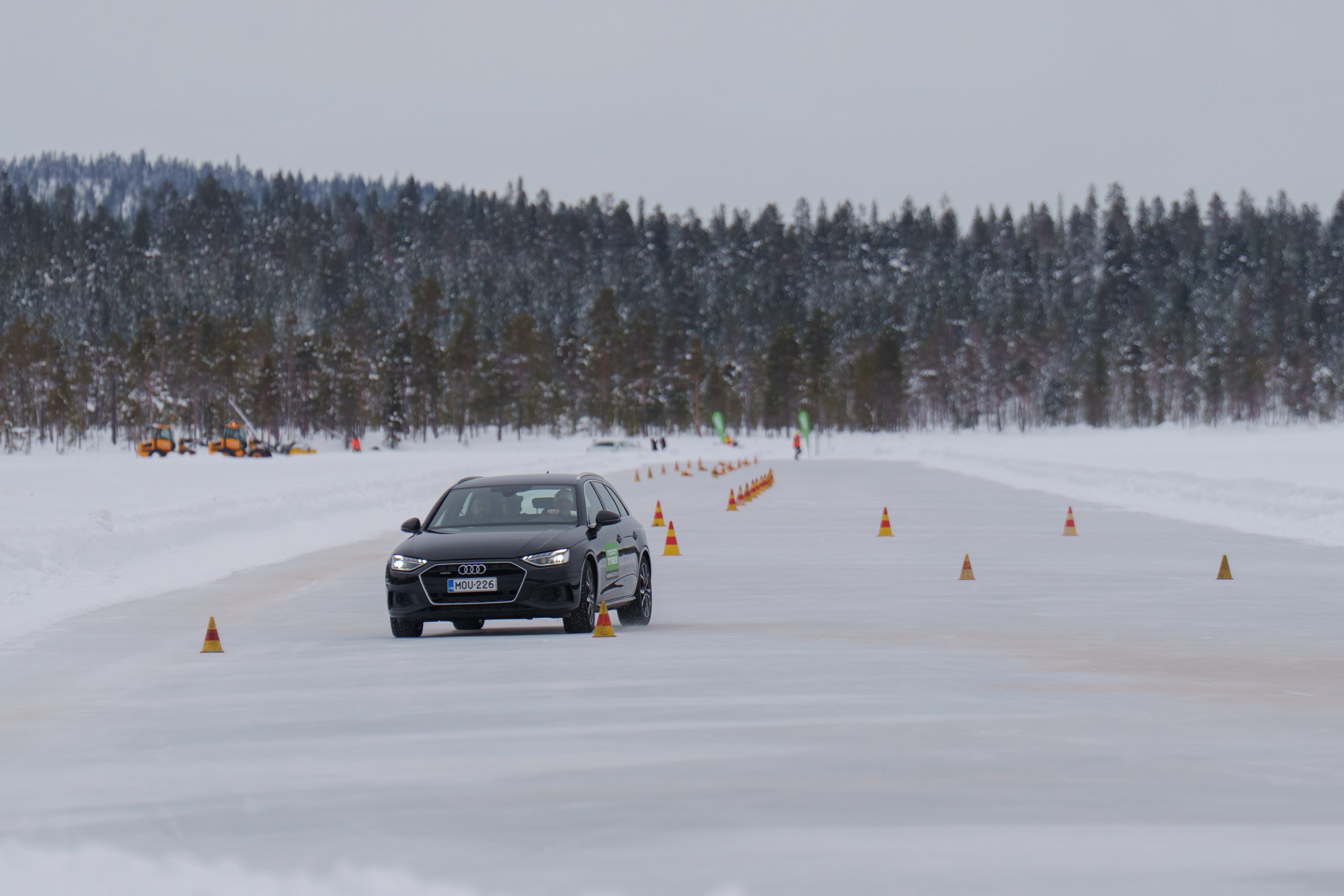
We also did cone tests—the kind of simple but ultra-revealing exercise: linked corners, slalom, transitions, tight lines. That’s where you find out whether a tire only gives you traction “in a straight line,” or whether it truly lets you drive.
And once again, the feeling was clear: it bites, it stays stable, and above all… it stays predictable. In a slalom, when you start picking up the pace, the last thing you want is a surprise reaction. Here, I felt like the tire let me work—without punishing me.
The test everyone understands: braking on sheer ice
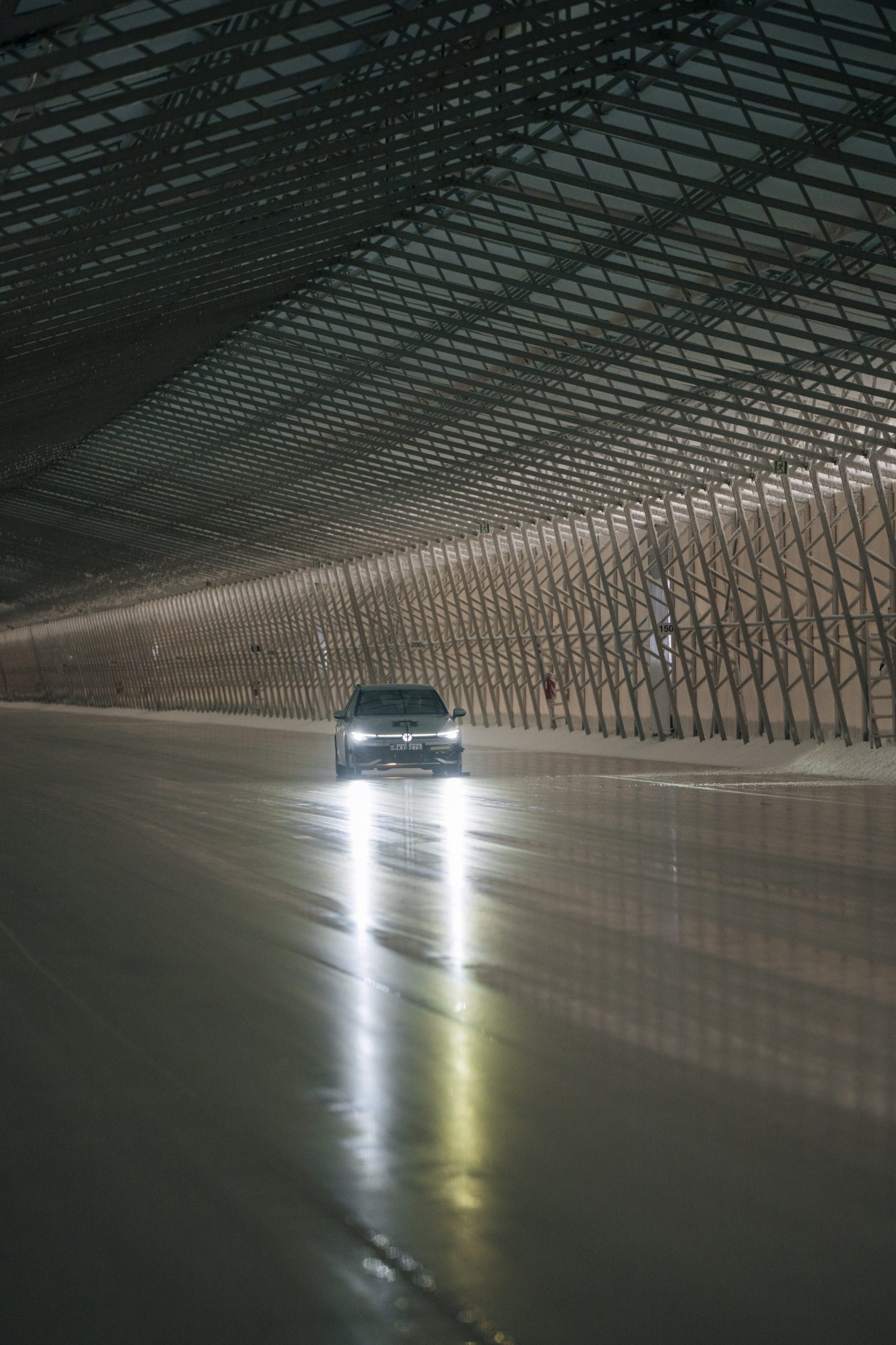
We also did a braking test, and that’s the moment you truly learn whether a tire “holds”… or just looks good.
In our case: at 70 km/h, we stopped in about 70 meters on sheer ice.
On sheer ice, nothing can fake it. If the rubber, the pattern, and the studs aren’t working together, you know immediately. And here—honestly—it was impressive.
The vehicles: serious machines, not light cars that hide limitations
We weren’t on lightweight cars that “mask” the limits. We had serious hardware, including:
- Audi RS4
- Audi RS5
- Volkswagen Arteon R (wagon)
- Porsche Cayenne
And in that context, you feel the difference quickly between “it goes” and “it controls.” Here, the tire delivers something valuable: everything stays logical. It bites, it holds, and the handling stays readable.
The tech “package”
The adaptive system is the headliner, but Nokian clearly built the tire around an overall package:
- Two stud types (center/shoulders) to better manage straight-line stability and cornering.
- SilentDrive: acoustic foam inside the tire to reduce noise.
- Aramid-reinforced sidewalls: durability/protection focus.
- Deep grooves + 3D sipes: snow support and better stability.
And certifications: 3PMSF + the ice grip symbol.
Reducing asphalt wear: a bigger issue than people think
Another point I find really interesting—and one that goes beyond pure performance—is road impact. We all know studded tires can wear asphalt, and that’s one reason they’re restricted or banned in some places.
Nokian claims this new concept could reduce that effect, with an announced reduction of up to -30% in road surface wear (according to their data), plus an announced noise reduction (up to -1 dB).
And where it gets interesting is that this kind of innovation can help move the conversation forward on the acceptability of studded tires.
A concrete example: Ontario
In Ontario, studded tires aren’t allowed everywhere: the province indicates they’re not permitted in Southern Ontario, and that they are permitted in the North.
Historically, the province has even set specific periods of use for Northern residents.
So no, a tire doesn’t change a law. But if a technology can keep ice grip while reducing aggressiveness on asphalt, that becomes a strong argument in places where this issue is still sensitive.
Claimed figures (according to Nokian)
On paper, Nokian claims improvements versus the previous generation: up to +10% ice grip, up to +5% wet grip, up to -30% road surface wear, and up to -1 dB in noise.
As for availability: the tire is announced for fall 2026, with 122 sizes (14 to 22 inches) and 24 sizes including SilentDrive.
A quick detour worth taking: 90 years of winter in their blood
“Hakkapeliitta” isn’t just a name—it’s a lineage. Nokian has carried a near-obsession with winter for almost a century.
- 1934: the world’s first winter tire (Kelirengas).
- 1936: the first Hakkapeliitta for passenger cars.
- 1986: the Ivalo test center in Lapland.
- 2014: retractable stud concept presented; then years of prototypes and testing—especially at White Hell.
That’s why the Hakkapeliitta 01 doesn’t feel like an idea that came out of nowhere: it feels like the logical next step in a long history of winter innovation.
Conclusion (my real verdict)
After testing it in the extreme—sheer ice, soft snow, packed snow, cone cornering, braking, traction control on or off—I can say one thing: I didn’t just “try” the Hakkapeliitta 01. I felt it working.
And that’s exactly what you want from a winter tire: not just numbers, not just a spec sheet… but a feeling of control, safety, and room to maneuver when winter decides to test you for real.